

Competitive Data
by Competera: Retail competitive intelligence
Please fill out the form to watch video
Loading form...
Product Tour
Trusted by 50+ organizations across the globe

How Competera’s retail competitive intelligence works
Get high-quality, context-rich competitive data to power your pricing
Collect competitor prices, promotions, stock levels, and custom attributes across every market on your schedule.
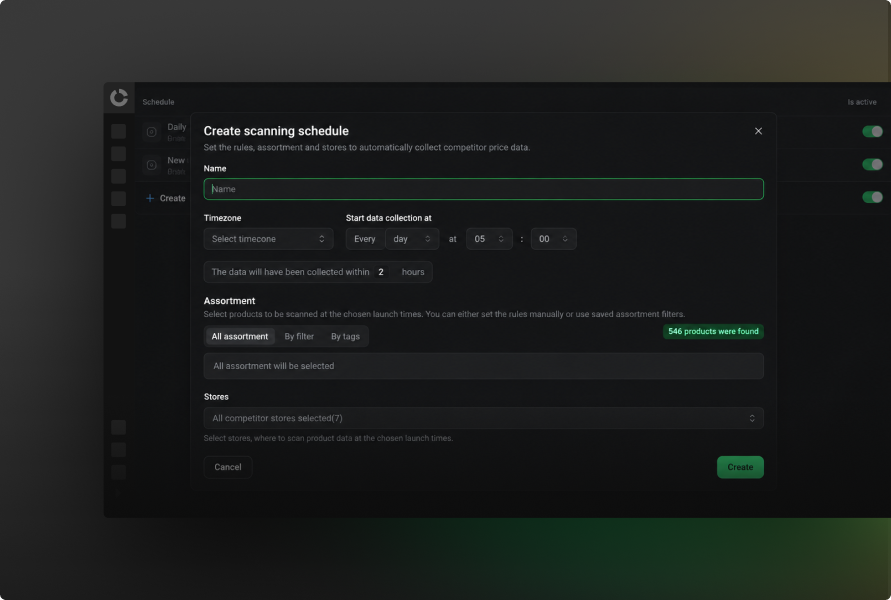
- On-demand scraping: choose which competitor sites, categories, and SKUs to scan, including multiple scans per day, timed before your repricing event.
- Full competitive context: capture not just prices but promo mechanics, discount depth, coupon codes, multi-buy offers, stock availability, and custom on-page attributes.
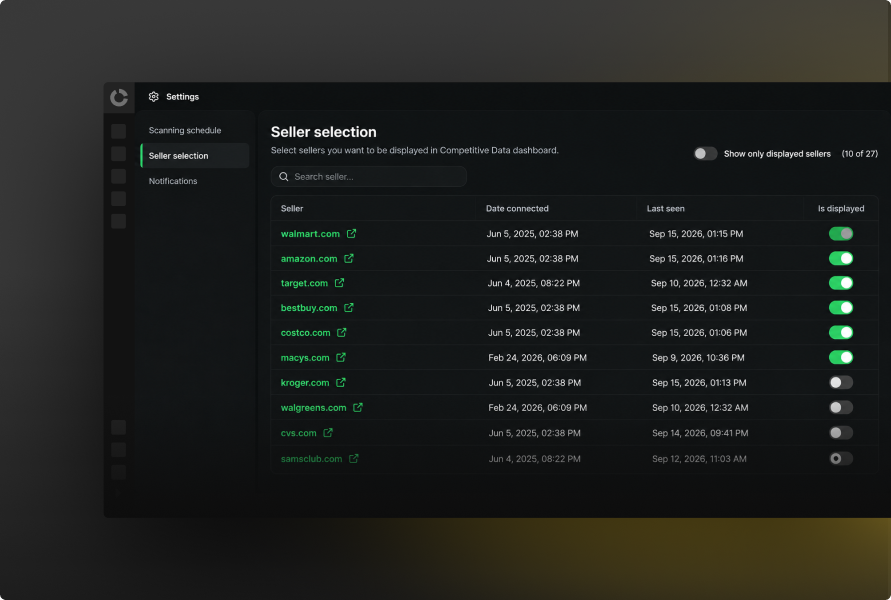
- Geo, store, and marketplace coverage: collect region-, zip-, or store-specific prices and multi-seller marketplace data with seller identity retained.
- Anti-bot handling: ensure data scraping resilience across websites that deploy anti-bot protections with a dedicated engineering team.
Match your full assortment to competitor items with 95% accuracy guaranteed by SLA
Map every SKU to competitor assortment through a combination of AI automation, rule-based search, and expert human validation.
- 3 matching types: cover your full competitive landscape with exact matching for identical products, similar matching where no direct equivalent exists, and variant matching across size, color, and configuration.
- Per-competitor tuning: tailor matching rules per competitor and per category, with adjustments at category level so the approach fits each SKU.
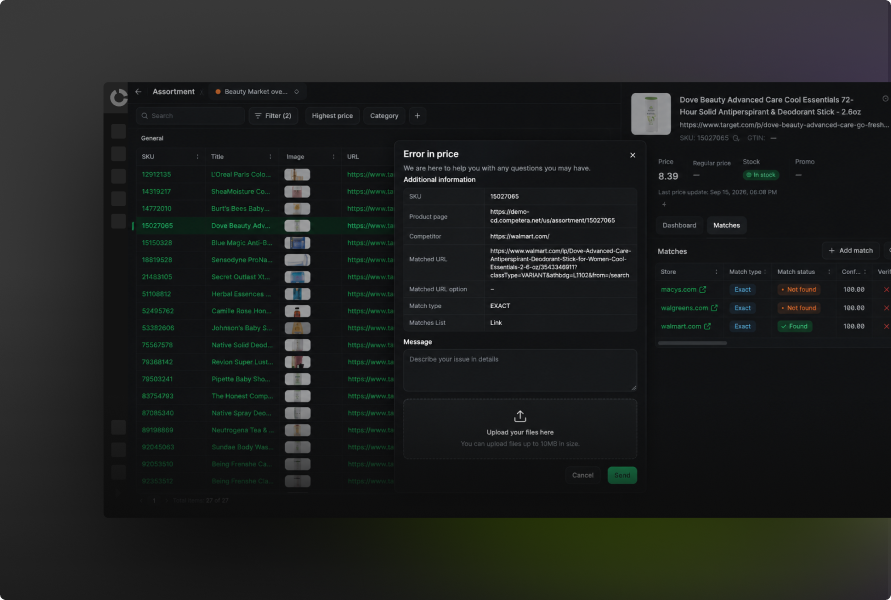
- Confidence scoring and user overrides: review every similar match with a confidence score that reflects relative similarity, and verify, edit, or override matches directly in the UI.
- Multi-layered QA: catch high-risk matches before they reach pricing decisions through automated price difference detection and ML title comparison, backed by human review against the 95% quality SLA.
Trust every data point before it affects a pricing decision
Validate every data point before it affects a pricing decision through automated QA pipelines, human review layers, and continuous anomaly tracking.
- Data health dashboard: monitor data collection and delivery health in real time, with the share of data points delivered against the SLA and freshness broken down by time.
- Automated anomaly tracking: validate every scrape against previous datasets through more than 20 independent validation logics that flag error patterns across all scrapers.
- Source transparency: trace every price point back to its source, region, and time of collection so each data point is verifiable before it informs a pricing decision.
- Scraping reliability: maintain uninterrupted data collection across all competitor stores, with failures from site or structure changes detected and fixed within 1 business day with no action required on your side.
Deliver competitive data to your systems in the format and cadence your pricing needs
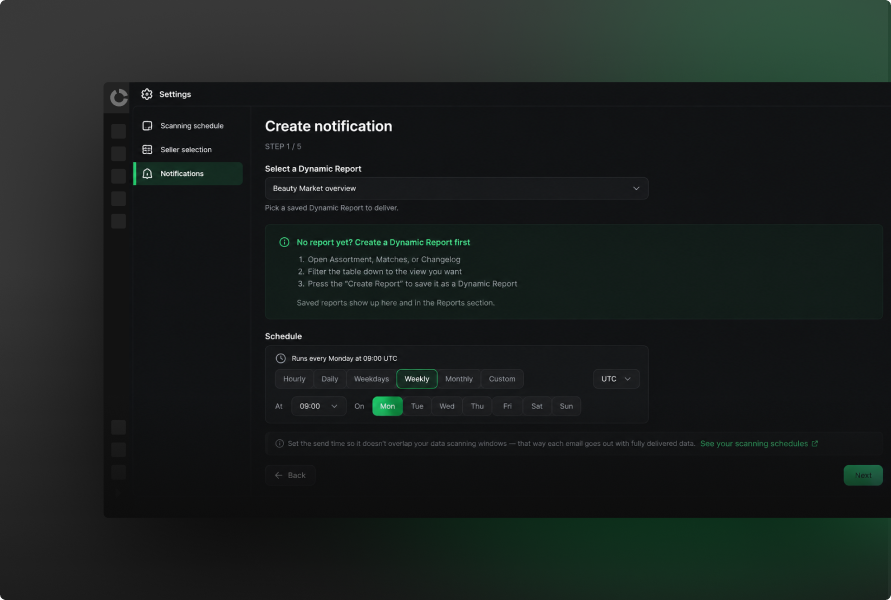
Get competitive data into your pricing workflows through an API, custom connectors, or self-serve exports.
- REST API: access all collected data through a documented REST API with user-key authentication, with transfer frequency following your collection cadence.
- Custom connectors: connect competitive data to Amazon S3, SFTP, Google BigQuery, and other cloud destinations through outbound integrations built on request.
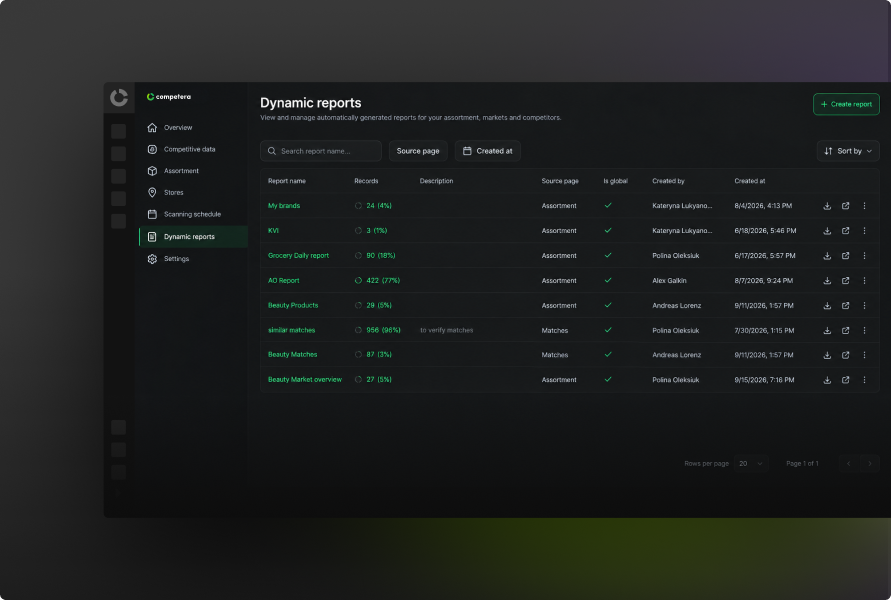
- Self-serve exports and reports: export your full dataset to CSV on demand or schedule email reports with a secure download link, with no manual generation required.
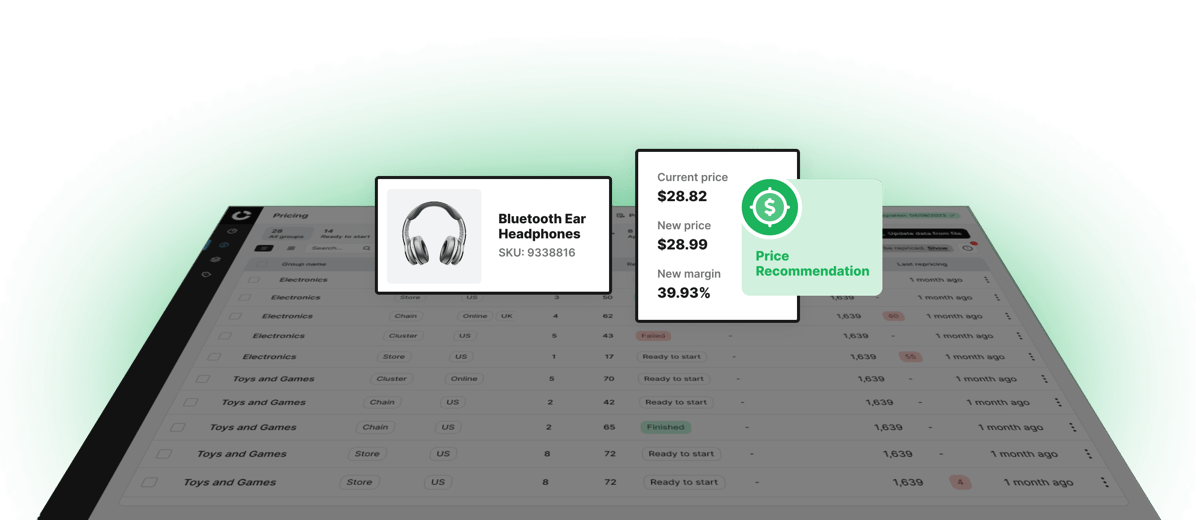
- Feed into Pricing Platform: feed competitive data directly into the pricing engine at predefined intervals so optimization always runs on current market data.
Manage your competitive data operations in one platform built for pricing and commercial teams
Pay only for the competitive data you actually use
Pay-per-use billing
-
Pay only for SKUs that are actually delivered on time to your dashboard, never for failed or delayed scans.
-
Scale your coverage up or down without renegotiating a fixed contract.
-
Budget predictably with a prepaid balance that aligns spend to actual data consumption.
Consumption reporting
-
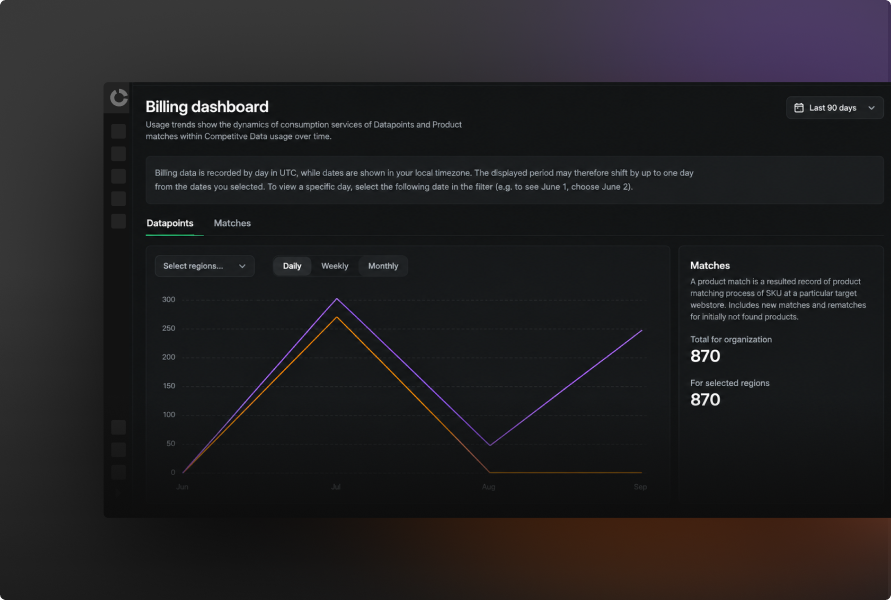
Review monthly reports that reflect your data usage, broken down by delivered data points and product matches.
-
Identify which categories, competitors, or regions drive the most consumption.
-
Make informed decisions about where to expand or optimize your data coverage.
Non-expiring balance
-
Prepaid balance never expires, so unused funds carry forward indefinitely.
-
Invest in competitive data coverage without pressure to use it within an arbitrary time window.
-
Add budget at your own pace as your assortment or competitor set grows.
Benefit from confident pricing decisions with transparent billing
Connect Competitive Data to the systems your pricing team already uses
Success stories from retailers powering their pricing with Competitive Data across industries and markets
Deploy Competitive Data by Competera with the level of hands-on support your team needs
What Competera’s retail competitive intelligence delivers
Price Intelligence
Price Crawling
Price Tracking
Pricing Analytics
Price Scraping
Product Matching
Build a competitive intelligence function that grows with your business

Resources for retail competitive intelligence and pricing teams
Explore guides, reports, and expert insights on competitive pricing strategy, price monitoring, and market data best practices.

Competitive pricing analysis: a step-by-step guide for retailers
Competitive pricing analysis is the process of collecting, comparing, and acting on competitor price data to inform your own pricing decisions.
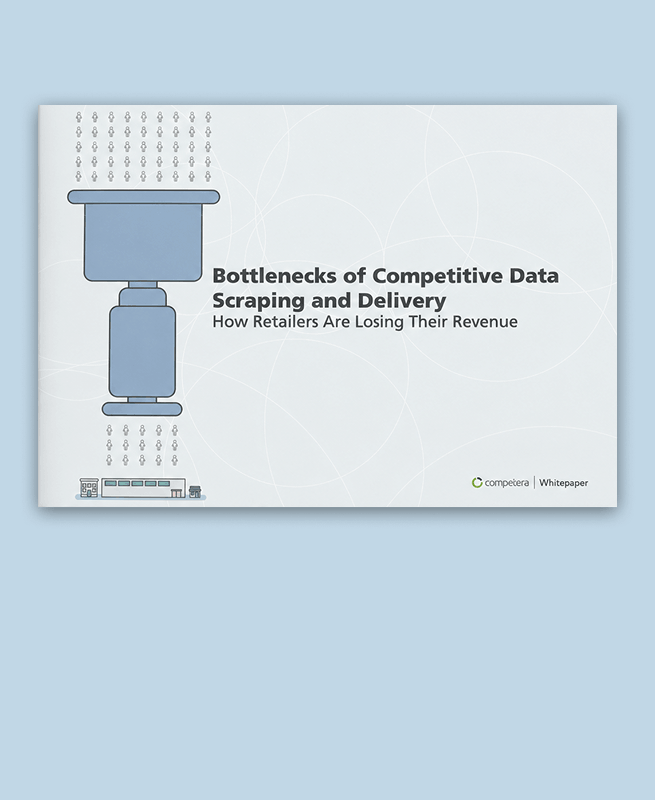
Bottlenecks of Competitive Data Scraping and Delivery
In this white paper we uncover competitive data quality requirements for different retailers, which criteria to use when checking the data quality after data collection process is finished, how the cost of data delivery varies by quality level, and which questions to ask the data provider when signing a contract to avoid fatal online retail mistakes, etc.
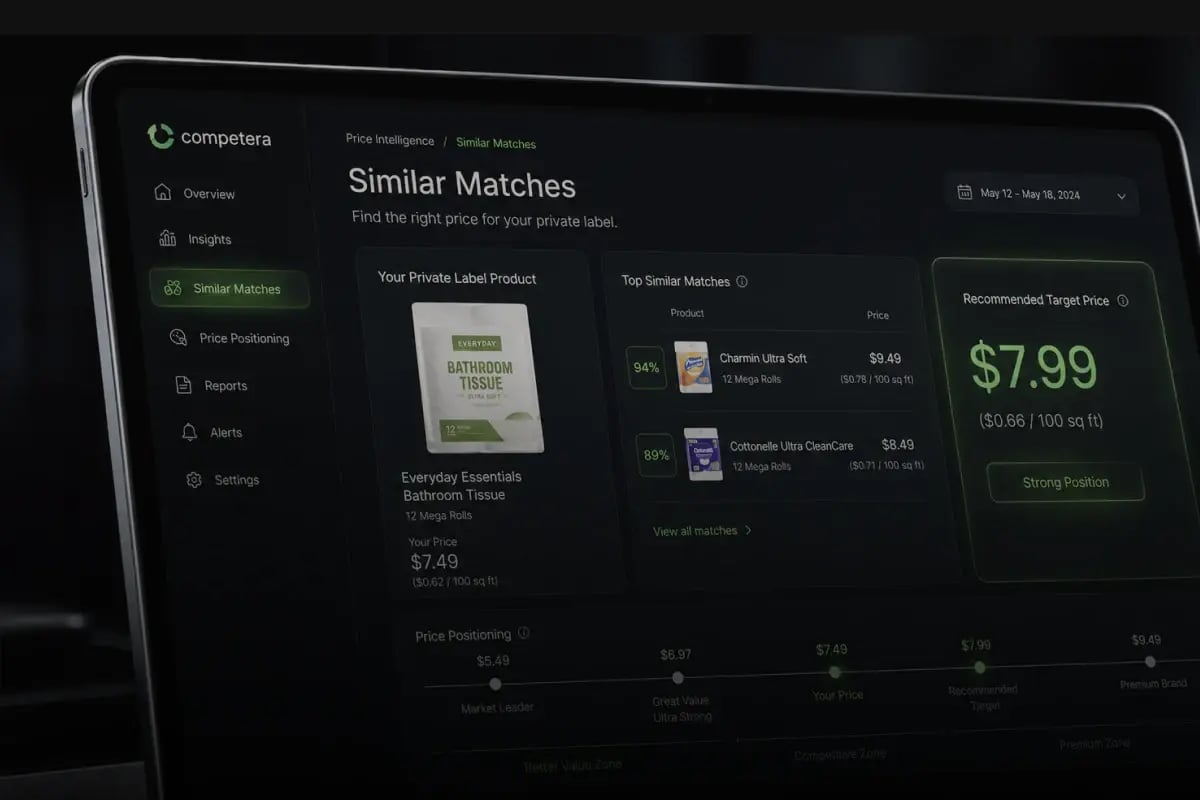
Similar Matches: How to Properly Position Prices for Private Label
Make accurate price positioning by finding similar matches of SKUs in the competitive assortment to set relevant prices, prevent margin and brand equity loss

FAQs about retail competitive intelligence
What is retail competitive intelligence?
Retail competitive intelligence is the practice of systematically collecting, structuring, and analyzing competitor pricing data, promotions, stock availability, and other commercial signals across your target markets. Unlike basic price scraping, competitive intelligence delivers context-rich, decision-ready data that pricing and commercial teams can act on with confidence.
Why do blind spots in market data hurt your pricing strategy?
When your competitive data covers only a fraction of the market, pricing decisions are based on an incomplete picture. Missing competitor prices, undetected promotions, or incorrect product matches lead to two costly outcomes: unnecessary price concessions where you undercut the market without realizing you were already competitive, and missed opportunities where competitors raise prices and you fail to follow. Over time, even small blind spots compound into measurable margin erosion and revenue loss. Retailers operating with manual spot checks typically cover 20 to 30% of their competitive landscape, leaving the other 70% unmonitored.
What are the competitive pricing challenges that enterprise retailers face?
Enterprise retailers face three core challenges. First, scale: monitoring thousands of SKUs across dozens of competitors, regions, and channels creates a data volume that manual processes cannot sustain. Second, accuracy: wrong product matches silently distort pricing decisions, and most teams have no reliable way to detect or prevent them. Third, context: raw competitor prices without promo flags, stock availability, or variant-level detail do not tell the full story. A competitor’s price may appear lower, but if it includes a temporary promotion, a different pack size, or an out-of-stock item, matching it would be a margin-destructive decision. These challenges grow with assortment size, making automated, SLA-controlled competitive intelligence essential.
What key use cases does Competitive Data by Competera cover?
Competitive Data by Competera covers five primary use cases. Real-time competitor price monitoring: track competitor prices, promotions, and stock availability across your full assortment on a schedule you define, with multiple scans per day timed before your repricing events. Promotional and discount intelligence: capture promo type, discount depth, coupon codes, multi-buy offers, and on-page badges so your team sees the full commercial context behind every competitor price. Assortment gap analysis: identify where competitors carry products you don’t, where you’re in stock and they aren’t, and where new competitor listings appear, using similar matching and full category crawls. Product matching: map your SKUs to competitor listings using a combination of AI, rule-based logic, and human validation, with 95% match quality guaranteed by SLA. Foundation for pricing optimization: feed validated, context-rich competitive data directly into Competera’s Pricing Platform so AI-driven pricing decisions run on trustworthy, current market data.
What are the benefits of using Competera’s Competitive Data?
Competera’s Competitive Data delivers five measurable benefits. Complete market coverage with no cap on SKUs, competitors, regions, or scan frequency. Trustworthy product matching with 95% quality guaranteed by SLA, combining AI automation with human validation. Full competitive context that goes beyond prices to include promotions, stock availability, custom attributes, and multi-seller marketplace data. SLA-controlled data freshness, with collection timed before your repricing events so pricing decisions run on current data. And a direct path to pricing optimization: Competitive Data feeds into Competera’s Pricing Platform, so the same data foundation scales from competitive monitoring to demand-aware AI pricing without migration or data loss.
How often does Competera refresh competitive pricing data?
You define the collection frequency. Competitive Data supports multiple scans per day, timed before your repricing events so pricing decisions always use the freshest data available. There is no cap on daily scans. Collection schedules are configurable per competitor and per category, so high-priority SKUs or fast-moving categories can be scanned more frequently than the rest of the assortment. Data freshness is tracked in the Data Health dashboard, broken down by time band (under 3 hours, 3 to 8 hours, over 8 hours), so you can verify completeness and freshness before any repricing run.
How many SKUs and markets can Competera’s Competitive Data cover?
What happens if quality data isn’t provided?
How does Competera’s retail competitive intelligence connect to pricing decisions?
Competitive Data by Competera is designed as the data foundation for pricing decisions, not as a standalone monitoring tool. Collected competitor prices, promotions, and stock data flow directly into Competera Pricing Platform at predefined intervals, so the pricing engine always operates on current, validated market data. For retailers using Adaptive AI (price-led optimization), competitive data feeds the rule builder and statistical forecasting. For retailers using Contextual AI (demand-led optimization), it becomes one of 20+ demand-driving factors the model considers. This direct connection means there is no manual export, no data transformation step, and no delay between market movement and pricing response.
Is Competitive Data a “competitive pricing software”?
Why is Competitive Data the best price scraping solution?
Competitive Data by Competera is built on the premise that price scraping alone is not enough. Most scraping solutions collect raw prices but leave product matching, quality assurance, and context to the customer. Competera handles the full pipeline: collection across unlimited SKUs, competitors, and regions; three-layer product matching (exact, similar, and variant) with 95% quality guaranteed by SLA; automated QA through more than 20 validation logics plus human review; and full competitive context including promo mechanics, stock availability, geo-level pricing, and marketplace multi-seller data. Every data point is delivered under published SLAs for quantity, quality, and freshness, with a dedicated engineering team handling anti-bot protections so data collection is never interrupted. The result is structured, validated, context-rich competitive intelligence ready to power pricing decisions from day one.
Please fill out the form to watch the product tour
Loading form...